
CCAT Practice Test: Beat the 50 Questions in 15 Minutes
The CCAT is not a hard test. It is a fast test. Fewer than one percent of candidates answer all 50 questions inside the 15-minute limit, and Criteria Corp designed it that way. Once you accept that speed is the lever, your prep strategy changes completely.
By PrepClubs Editorial Team, updated April 18, 2026
The Criteria Cognitive Aptitude Test (CCAT) is a 50-question, 15-minute pre-employment screening from Criteria Corp that measures problem-solving speed across verbal reasoning, math and logic, and spatial reasoning. Roughly 7,000 employers use it, with heaviest concentration among Vista Equity Partners portfolio companies. The average raw score is 24 out of 50. Most software roles target the 70th percentile (about 31 correct); strategy and product roles target the 80th percentile (about 35 correct).
Source: Criteria Corp official documentation and Vista Equity portfolio company hiring data.
The biggest CCAT question bank online
What the CCAT actually measures
The Criteria Cognitive Aptitude Test is a 50-question, 15-minute screening used by roughly 7,000 employers, with the heaviest concentration among Vista Equity Partners portfolio companies, private equity add-ons, and mid-market SaaS. Vista alone requires it for virtually every full-time hire, which is why CCAT volume exploded after 2015.
The test blends three question families: verbal reasoning (antonyms, analogies, passage inference), math and logic (word problems, number series, basic algebra), and spatial reasoning (odd-one-out, pattern rotation). The exact mix varies slightly between attempts, but the ratio is roughly 20 verbal, 20 math, 10 spatial.
What Criteria tests is not intelligence. It is the willingness to move on from a hard question in 18 seconds rather than burning 90 seconds trying to crack it. That discipline is coachable, which is why prep works so well on this test.
The three sections, broken down
Each section punishes a different weakness. Know which one costs you most before you touch a practice test.
Verbal Reasoning (~20 questions)
Antonyms, analogies, and short-passage inference. Vocabulary is roughly SAT-tier. The passage questions are the highest-leverage: one careful read often yields two correct answers in 90 seconds.
Math and Logic (~20 questions)
Percentages, ratios, work-rate problems, number series, and basic algebra. No calculator allowed. The trap is not difficulty, it is messy arithmetic eating your clock.
Spatial Reasoning (~10 questions)
Shape rotation, odd-one-out, and pattern matrices. These are usually the fastest questions if you have trained your eye. Candidates who skip spatial prep leave easy points on the table.
Mixed order
Questions are NOT grouped by type. You will jump from a math problem to a spatial puzzle to a vocabulary item. Build a mental switch-cost routine so transitions do not bleed seconds.
Real CCAT-style question examples
Three representative items pulled from the PrepClubs CCAT bank. These are drawn directly from the same question pool 1,600+ paying students have used to prep. The 50-question CCAT will show roughly 10 spatial reasoning items, plus matrix and series visuals across math and logic.
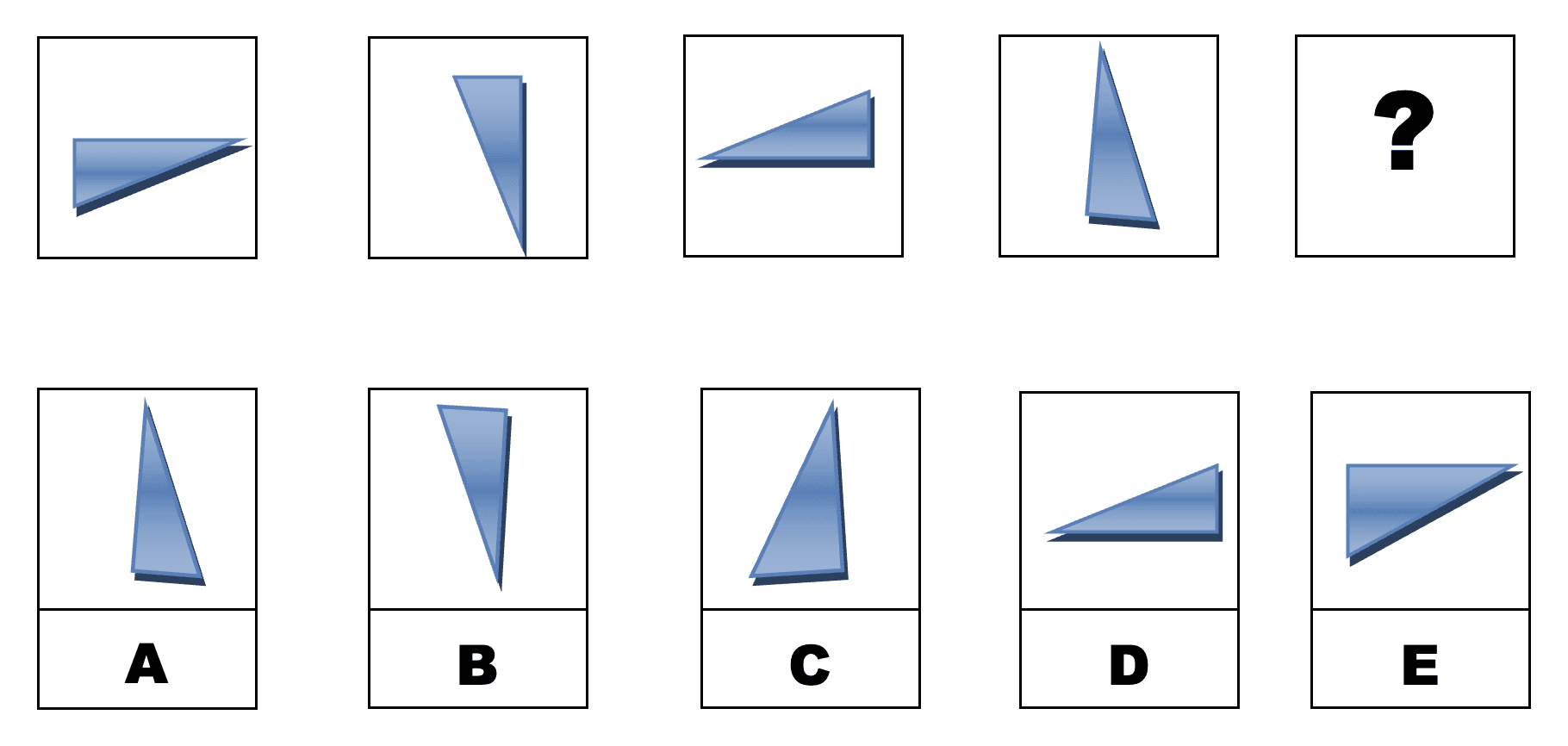
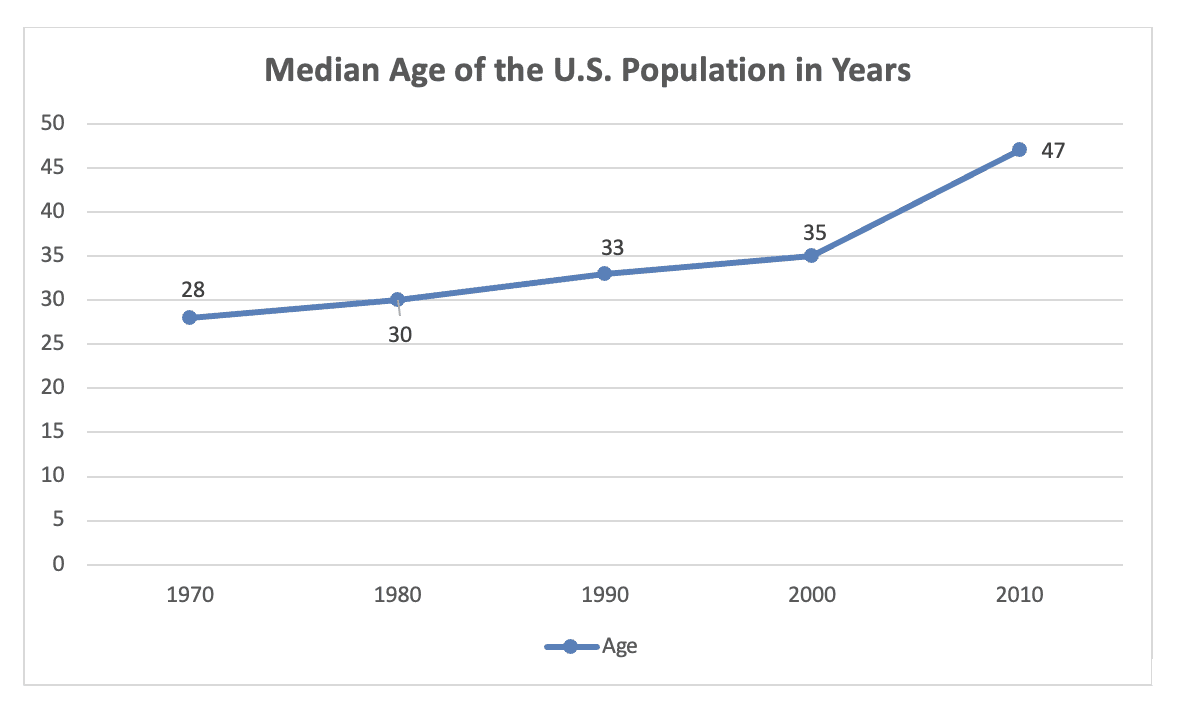

PrepClubs is the only CCAT prep site with 1,350+ questions across this exact item-bank style. JobTestPrep ships under 800. Most free sites ship under 200.
CCAT vs Wonderlic vs PI Cognitive: a 30-second comparison
The three fast cognitive tests look identical from the outside. They are not. Pick the right test to prep for first.
| Spec | CCAT | Wonderlic | PI Cognitive |
|---|---|---|---|
| Questions | 50 | 50 | 50 |
| Time limit | 15 min | 12 min | 12 min |
| Seconds per question | 18 | 14.4 | 14.4 |
| Average score | 24 / 50 | 20 / 50 | 20 / 50 |
| % who finish all items | Under 1% | Under 1% | Near zero |
| Calculator allowed | No | No | No |
| Sections | Verbal, math, spatial | Verbal, math, logic | Numerical, verbal, abstract |
| Heaviest employer pool | Vista Equity portfolio, mid-market SaaS | NFL, Fortune 500 retail and finance | Sales-heavy companies, retail, manufacturing |
| Retake friendliness | Some allow after 6 mo | Often one retake, 30-day window | Most allow after 12 mo |
| PrepClubs questions | 1,350+ | 400+ | 400+ |
Inside the CCAT scoring engine: how Criteria turns 50 raw items into a percentile
The raw-to-percentile map is role-aware
Criteria does not run one universal percentile table. The CCAT applies a role-specific norm group. When an employer sets up the test, Criteria asks them to tag the role family: software engineering, sales, ops, customer success, executive. Each tag pulls a different percentile lookup table.
This is why a raw score of 32 can register as the 80th percentile for sales but the 72nd percentile for software. Software candidates as a population score higher on the CCAT than sales candidates do, so the bar is harder. Most candidates do not know this. They see a 32 and assume "32 is 32" everywhere. It is not.
The practical implication: if you are interviewing for a software, product, or strategy role, target 35 correct rather than 31. The 4-question difference is the gap between the 70th-percentile sales bar and the 80th-percentile software bar.
Why Vista Equity weights CCAT so heavily
Vista Equity Partners owns or controls more than 80 portfolio companies, mostly mid-market enterprise SaaS. Across that portfolio, Vista pushes a standardized hiring playbook that includes a near-universal CCAT screen at the top of the funnel. This is not a soft preference. CCAT cutoffs are enforced.
Vista chose the CCAT for two reasons. First, it is fast: 15 minutes is short enough that even senior candidates accept it. Second, it correlates with sales-cycle compression and engineering velocity in their post-acquisition data. Vista runs internal validity studies on every cognitive screen they use, and CCAT cleared the bar.
If you are interviewing at any of the following companies, expect a CCAT before you talk to a hiring manager: Cvent, Finastra, PowerSchool, TIBCO, Mediaocean, Granicus, Drift, Apptio, JAMF, Allocadia, and roughly 70 others.
The 18-second budget and how to actually spend it
Fifteen minutes divided by 50 questions is exactly 18 seconds per item. No human reads, computes, and answers a CCAT math problem in 18 seconds. The CCAT is built around the assumption that you will skip.
Top scorers spend 8 to 10 seconds on easy items (verbal antonyms, simple arithmetic), 25 to 30 seconds on medium items (passage inference, two-step word problems), and zero seconds on three or four flagged hard items. They guess on the hard ones in the final 30 seconds. This pacing produces 38 to 42 correct.
Bottom-scoring high-IQ candidates do the opposite. They burn 90 seconds on a hard math problem because they know they can solve it. They are right. They solve it. Then they get 28 correct because the clock ran out at item 35. The CCAT punishes intellectual stubbornness, not low IQ.
Build the rest of your prep stack
Scoring, percentiles, and what Vista actually wants
Your raw score is the number correct out of 50. There is no penalty for wrong answers, so you should always guess rather than leave blanks. The average raw score is 24.
Criteria reports your score as both a raw number and a percentile. Vista Equity portfolio companies commonly use a 70th-percentile cutoff (roughly 31 correct) for software roles and an 80th-percentile cutoff (roughly 35 correct) for product and strategy roles. Criteria does not publish these ranges, which is why candidates underestimate the bar.
One caveat: Criteria rescales for role type. The raw-to-percentile conversion is not identical across job families. A 32 that is 80th percentile for a sales role might be 72nd percentile for a software role. When in doubt, target 35 correct.
Who uses the CCAT?
The CCAT is dominant in private-equity-backed tech. If you are interviewing at a Vista Equity, Thoma Bravo, or Cvent-style company, expect it.
A 7-day CCAT prep plan that actually works
Day 1: Diagnostic and timing calibration
Take one full-length untimed practice. Note which section ate your time. The goal is not a score, it is a weakness map. Most first-time takers lose 3 to 5 minutes on two or three math problems they should have skipped.
Days 2-3: Weakest section, in 10-question timed sets
If math was slowest, drill 10-question math-only sets at 3 minutes each. Review every wrong answer the same day. Build a mental "skip trigger": if a question takes more than 25 seconds without progress, flag and move.
Day 4: Pattern library for spatial and number series
These two families reuse the same 6 or 7 underlying patterns. Memorize the patterns, not rules. After 40 questions across both, you will recognize most variants on sight.
Day 5: Full-length mock, strict timing
One clean 15-minute run, no interruptions. Compare to Day 1. If you did not gain at least 6 points, your issue is timing discipline, not content.
Day 6: Weak-spot sprint plus skip-strategy drill
Revisit only your wrong answers from the mock. Practice explicit skip decisions: look at each problem for 3 seconds, commit to solve or skip.
Day 7: Rest
No practice the day before your test. Sleep 8 hours. Cognitive tests punish fatigue more than missed prep.
The four mistakes that sink CCAT scores
Reading CCAT passages twice
Candidates lose 60 to 90 seconds re-reading. Train yourself to read once, mark the answer, and move. If you cannot answer after one read, guess on the most concrete-sounding option and move.
Attempting every math problem
Two or three math problems are deliberate time sinks. Skipping two hard math items costs you 2 points but saves 3 minutes, which is 6 to 10 easier points elsewhere.
Leaving blanks at the end
There is no guessing penalty. Candidates who run out of time and leave 8 blanks cost themselves 1 to 3 points vs. random guessing.
Prepping with generic aptitude questions
SHL-style questions are longer and slower. CCAT questions are shorter and faster. Use CCAT-specific question banks, not general aptitude resources, in your final 3 days.
Related reading
CCAT FAQs
The CCAT rewards the prepared. Start now.
Full-length timed practice. Section-specific drills. Real score reports.
Start prepping for $39